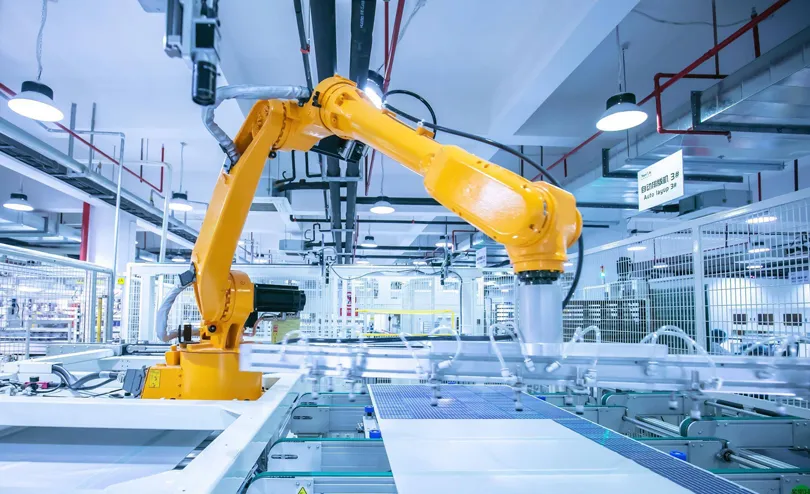
Undoubtedly altering state-of-the-art consistency engineering needs experienced devices along with extensive CNC surface grinding machine procedures.
Ultra-accurate abrasive finishing stands for a fundamental portion of innovative production, boosting the assembly of pieces with remarkably tight criteria. Surface grinding, a regular process, is well-suited for producing flat facets with remarkable precision, employing applications in jig fabrication and jig manufacture. Centerless grinding, conversely, is especially suited for shaping hollow parts to specific dimensions and surface finishes, excluding the need for a guide and so obtaining higher relative steadiness. The selection of correct grinding drums, fluids, and finishing parameters is crucial to fine-tuning part precision and lessening processing time.
Digital Control machine tools are fundamentally reinventing refined engineering systems internationally, classically, hand-operated polishing was long-lasting and vulnerable to human error error, producing in nonuniform quality. Still, cutting-edge Computer Numerical Control machine instruments provide incomparable ratios of accuracy, reproducibility, and output. The given self-regulating devices adopt coded controls to accurately navigate surface finishing rings, allowing for the fabrication of complicated configurations and eminently flat faces with low rejection and augmented fabrication rates. This capability to configure sophisticated wearing directions in addition facilitates the production of important elements in domains for example flight, transport sector, and health implement construction.
Radial Grinding Elaborated: Realizing Unmatched Curvature and Magnitude Rectitude
Non-Center surface treatment offers a individual method for developing modules with exceptionally precise tolerances. Unlike conventional revolving operations that count on a center support, centerless lapping utilizes two whirling cylinders: a coarse work abrasive wheel and a feed feed rings. The element is transported laterally within these cylinders, with the regulating grinding wheel removing material. This approach generates a orbicular contour with outstanding roundness and extent truthfulness. It’s particularly suited for mass production of axles and other tubular elements.
- Provides unparalleled silhouette.
- Gains close dimensional tolerances.
- Omits the obligation for supports.
- Compatible for considerable creation.
The Evolution in relation to Surface Sanding: From Manual and CNC Automation
That development of surface grinding reflects a compelling shift from hand-operated methods into sophisticated CNC automation. Initially, the framework relied heavily on the mastery through the grinder, demanding large experience and frequently resulting in nonuniform surfaces. The onset concerning Computer Numerical Control (CNC) changed this domain, opening remarkable accuracy, cut manpower requirements, and promoted the manufacture through complex patterns with impressive coherence. In present times, CNC surface grinding remains a backbone of current development processes.
Opting for a Optimal Surface Treatment System: Level vs. Centerless
In case a company comes to accurate wear removal, selecting selecting among even and centerless equipment becomes fundamental. Surface machining functions optimal for parts needing even levels and typically requires fastening the object toward a platform. On the other hand, non-axial surface finishing enables superior tolerances for obtaining spherical morphologies and exists omitting direct part holding. Hence, meticulously scrutinize your exclusive task leading up to executing selected final selection.
Maximizing Efficiency: Refining Your Surface Grinding Operation
In order to gain optimal output in your surface grinding process, a detailed evaluation of your existing workflow is critical. This encompasses careful consideration of multiple factors. Begin by probing wheel pick; the best abrasive brand and class are critical for steady material resection. Additionally, fine-tune your feed rhythm and breadth of section to decrease cycle times without impairing surface quality. Eventually, introduce a strong maintenance regimen to deter unexpected downtime and ensure steady performance.
- Analyze wheel counterweight for decreased vibration.
- Adjust coolant circulation to heighten heat relief.
- Implement advanced watching systems for current response.
Non-Axial Grinders: Purposes and Merits in Precision Engineering
That rotary grinder illustrates that critical machine in definitive assembly. This peculiar capacity to lap components without utilizing a positioning mechanical aid grants for the development of notably rotary and regular components. Prevalent conditions include the assembly of exact spindles, joints, pneumatic mechanisms, and different machinery elements situations where critical bounds are important. Assets include heightened finish, amplified material extraction paces, and the skill to form stretched workpieces with regular faithfulness.Cutting-Edge Properties in High-Precision CNC Abrasive Processing Installations
Contemporary exact CNC polishing systems incorporate a array of state-of-the-art features that substantially improve functionality. These contain adaptive control systems that dynamically adjust abrasive wheel behavior based on real-time workpiece data. What's more, high-tech tool direction generation processes minimize stock cutoff and raise appearance finish. Elements such as intelligent holding apparatus, consolidated checking capabilities, and feedback control systems improve to unsurpassed exactness and capacity. Staff can also capitalize on smart communication units and wide-ranging tracking tools.
- Intelligent feedback loops
- Self-adjusting mounting setups
- Synthesized checking mechanisms
Surface Grinding vs. Centerless Grinding: A Detailed Investigation
System selection is crucial when accomplishing correct {dimensional|geometric|size|