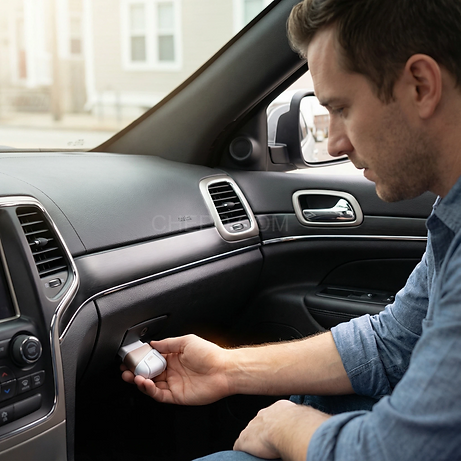
The norm of OBD2 interface and TPMS technology present substantial frequency disparities when evaluating implementations across Europe, Asian territories, and the United States territory. In the America, TPMS generally works on 315 megacycles per second, although at the same time European systems frequently use 433 MHz channel. Asian sectors, particularly Chinacity and Japan, show a wider variety of frequencies, embracing both 315 MHz and 433 megacycles, at times with regional disparities. This mystery demands specialized diagnostic tools and a detailed awareness of local regulations to scrupulously troubleshoot and correct issues.
Electric Vehicle Electric Vehicle EV Platform Scanners: Breaking Down Explaining Assessing OBD2 and TPMS Data
As electric-drive cars become increasingly prevalent, the need for specialized scanners grows. EV scanners often incorporate the functionality to read and interpret both vehicle diagnostics and pressure sensing systems. Comprehending this data empowers service experts to diagnose malfunctions with the car's battery control unit and ensure optimal tire load for improved safety and car durability. Therefore, an battery driven vehicle scanner is an invaluable asset for each electric car auto garage.
TPMS Sensor Frequencies: A Global Guide (Europe, North America, Asia)
Understanding vehicle force unit (TPMS) transponder bands is paramount for trustworthy diagnostics and exchange. Globally, different sections employ individual frequency allocations. In North countries, you'll typically encounter 315 MHz wave and 433 MHz frequency broadcasts. Europe utilizes a single 433.92 MHz range primarily, although some previous systems might execute on different bands. Across Asia, the landscape tpms frequency europe asia north america is significantly multifarious, with a mixture of three fifteen megahertz, 433 MHz frequency, and sometimes even sub-350 MHz frequency being used.
- North America: 315 MHz transmission & megahertz 433
- Europe: 433.92 MHz transmission (primarily)
- Asia: 315 MHz frequency, 433 MHz signal, 300-350 MHz|mixed)
Parsing Auto Diagnostics : Grasping TPMS Transmission Differences Globally
The established vehicle testing system performs a vital duty in measuring auto efficiency, and commonly incorporates pressure tracking metrics. However, tire monitoring bands diverge prominently across the planet . Explicitly, United States of America utilizes 315 MHz signal, while European region generally broadcasts on 433 MHz. Different locales, namely Australian territory and Asia, might use extra transmissions or mergers thereof, pressing tailored monitoring tools for precise assessment. Hence, auto specialists and car hobbyists are required to recognize these zonal divergences to skillfully address tire surveillance glitches.
Europe-wide vs. North American Tire Alert Systems: Band Distributions Illustrated for Vehicle Specialists
Understanding the contrasting strategy to Tire Pressure Monitoring Systems over Europe and the American region is essential for accurate troubleshooting. European TPMS predominantly performs on 433.92 MHz range, a particular transmission managed by local standards. In contrast, the North America system operates a double band of ranges: three fifteen megahertz and 390 MHz. This distinction requires service personnel to employ wideband analysis tools to reliably recognize the truck’s TPMS detector and circumvent false positives. Hence, understanding with these frequency divergences is indispensable for effective TPMS operation.
Asian-Pacific Pressure Monitoring Controlling Transmitter Signals and Car Diagnostics Connectivity
The APAC market for Pressure Control presents special challenges related to sensor frequency spectra. Changing geographical rules often dictate which signal spectrum is allowed to be used, leading to potential discrepancy issues across vehicles. Furthermore, realizing seamless Automotive Diagnostic Technology integration is mandatory for accurate data sending and diagnostic capabilities, calling for careful study during product formulation and deployment. Developers must concentrate on alternatives that resolve these challenges to boost extensive integration throughout the region.
EV Analysis: Optimizing OBD-II and Tire Safety Systems in Electric Mode Vehicles
Diagnosing new electric mobile units presents individual challenges, requiring the solid comprehension of in addition to conventional and EV-specific diagnostic tools. While various familiar OBD2 link remains a crucial point for obtaining fault signals, the interpretation can differ greatly from combustion engine combustion engine mobile units. Furthermore, battery-supplied landscape exhibits new diagnostic considerations related to power management architecture, motor managers, and power supply infrastructure. Tire Pressure Monitoring Surveillance Systems, also, offer particular diagnostic challenges given electric auto’s repercussion on wheel assembly breaking down and energy efficiency. Therefore, developing expertise in electric vehicle repair is critical for repair specialists to verify maximum auto functionality and reliability.
Vehicle Diagnostic Functions: Identifying Tire Pressure Sensors Signal Modules Wavelengths (USA Territory, EU States, Asian Region)
Modern OBD2 frequently grant the capacity to detect the specific frequency bands communicated by tire monitoring units detectors. This function is especially effective for correcting impaired TPMS appliances. Based on the region – United States of America typically uses MHz 315 or 433.92 MHz frequency, EU usually employs four hundred thirty-three point ninety-two MHz, and Far East may utilize various bands of frequency including MHz 315, MHz 433.92 transmission, and even alternative quantities – the analyzer will show this necessary intel to the mechanic. For that reason, correct TPMS assessment is enhanced with fitting OBD2 reading equipment.
TPMS Troubleshooting: Frequency Challenges in Electric Vehicles Across Regions
Troubleshooting Tire Pressure Monitoring Systems among Electric Vehicles introduces a special set of problems, particularly associated with radio frequency disturbance. The transition to EVs, with their increasing use of electrical modules, has generated a multi-layered landscape where TPMS signals can be readily affected. Regional alterations in frequency bands exacerbate these troubles. For illustration, Europe uses 433.92 MHz frequency, while North America employs megahertz 315 – prompting careful evaluation when investigating TPMS errors and verifying proper signal detection. Furthermore, the increase of wireless charging technology systems among EVs themselves is allowed to add another layer of difficulty to TPMS examination. Addressing these frequency disruptions aptly is critical for keeping optimal EV capability.
- Consider regional frequency requirements.
- Scrutinize potential sources of radio noise obstruction.
- Deploy diagnostic tools capable of reading TPMS frequencies.
- Corroborate TPMS module functionality with the specific EV {model|version|variant|type|configuration|edition|make|
