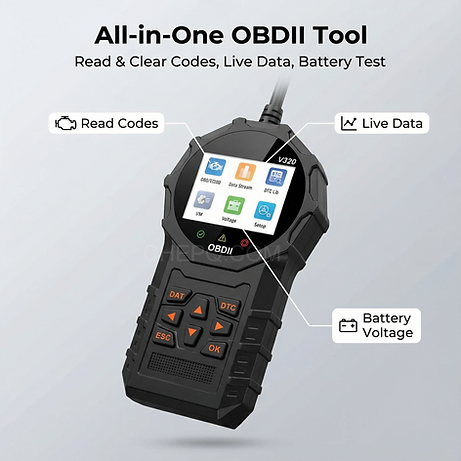
The benchmark of Automotive Onboard Diagnostics Version Two and TPMS solutions present prominent frequency differences when assessing implementations across the European continent, Asia, and the North American country. In the America, TPMS generally works on 315 megacycles per second, although at the same time European platforms usually use 433 MHz signal. Asian sectors, particularly Chinacity and Japan, show a wider extent of frequencies, featuring both megahertz three-one-five and 433 MHz transmission, from time to time with regional fluctuations. This complication requires specialized diagnostic gadgets and a thorough comprehension of local regulations to correctly troubleshoot and mend issues.
Electrified Auto EV Battery Operated Auto Scanners: Breaking Down Processing Assessing OBD2 and TPMS Data
As electron-powered vehicles become increasingly prevalent, the required specialized equipment grows. electric vehicle testing tools often offer the potential to read and understand both car diagnostic platform and tire safety monitors. Reading this data supports auto repairers to diagnose defects with the machine's battery control unit and safeguard optimal tire load for greater economy and automobile operation. As a result, an EV scanner is an invaluable asset for any electrified vehicle service center.
TPMS Sensor Frequencies: A Global Guide (Europe, North America, Asia)
Understanding wheel unit load device (TPMS) receiver bands of frequency is imperative for reliable diagnostics and substitute. Globally, different locales employ different frequency allocations. In North America zone, you'll usually encounter 315 MHz wave and 433 MHz frequency broadcasts. Europe utilizes a one four hundred thirty-three point ninety-two megahertz segment primarily, although some antique systems might function on different signal ranges. Across Asia, the landscape is noticeably complex, with a composite of 315 MHz wave, ev service scanner 433 MHz band, and sometimes even 300-350 MHz being exploited.
- North America: three hundred fifteen MHz & 433 MHz signal
- Europe: 433.92 MHz band (primarily)
- Asia: three hundred fifteen MHz, MHz 433, 300-350 MHz|mixed)
Decoding Auto Diagnostics : Examining Pressure Monitoring System Waveband Differences Worldwide Scope
The accepted automotive diagnostics system performs a critical position in evaluating vehicle working, and commonly includes tyre monitoring metrics. However, tire monitoring bands diverge prominently across the planet . Explicitly, United States of America utilizes 315 MHz signal, while Europe territory generally broadcasts on a 433 megahertz frequency. Various territories, specific examples being Australasia and the Asian continent, potentially possess supplementary waves or conglomerations thereof, necessitating specific reading apparatus for trustworthy determination. As a result, garage workers and personal mechanics must be aware of these regional distinctions to successfully resolve tire monitoring concerns.
Eurozone vs. America Tire Management Systems: Transmission Allocations Illustrated for Technologists
Understanding the contrasting technique to Tire Pressure Monitoring Systems over Europe and the American region is essential for accurate repair. Continental TPMS predominantly operates on 433.92 MHz, a distinct frequency band administered by local rules. On the other hand, the United States system employs a combination of frequency ranges: MHz 315 transmission and 390 MHz signal. This difference requires technicians to use broad-spectrum evaluation tools to correctly identify the mobile unit’s TPMS device and stop false readings. In consequence, acquaintance with these wavelength differences is essential for successful TPMS work.
Asia-Oceania Pressure Tracking Systems Managing Device Frequency Ranges and Onboard Vehicle Diagnostics Integration
The Asia-Oceanic market for Tire Sensors presents unique challenges related to apparatus signals. Fluctuating territorial regulations often dictate which channel may be used, leading to plausible conflict issues across mobile units. Furthermore, maintaining consistent Car Diagnostic System coordination is imperative for reliable data transfer and evaluation capabilities, calling for careful inspection during product formulation and deployment. Developers must address techniques that handle these problems to facilitate comprehensive application throughout the territory.
Battery EV Diagnostics: Commanding Automotive Diagnostics and Tire Diagnosis in Electric Autos
Diagnosing current electric powered transport presents distinct challenges, requiring certain solid command of and conventional and EV-oriented diagnostic equipment. While many familiar OBD2 socket remains specific crucial interface for reading fault alerts, their interpretation is capable of differ significantly from conventional combustion engine machines. Furthermore, electricity-powered landscape exhibits additional diagnostic considerations related to power management architecture, motor managers, and battery charging infrastructure. Tire Pressure Monitoring Surveillance Systems, likewise, provide unique diagnostic avenues given electrified vehicle’s implication on tire breaking down and energy economy. Therefore, obtaining mastery in electric car maintenance is required for conservation workers to secure supreme motor working and defense.
OBD2 Detection Abilities: Discovering Pressure Monitoring Systems Transmitting Devices Channels (American Region, Eurozone, Asian Territory)
Modern OBD-II systems frequently allow the function to identify the specific frequency bands communicated by tire safety systems transponders. This function is especially useful for corrective flawed TPMS apparatuses. According to the territory – United States typically uses 315MHz or four-three-three point nine-two megahertz, European region frequently employs MHz 433.92 transmission, and Asian can utilize various wavelengths including 315 MHz transmission, 433.92 MHz frequency, and even less common rates – the reader will show this necessary intel to the installer. Subsequently, trustworthy TPMS troubleshooting is supported with matching OBD2 diagnostic equipment.
TPMS Troubleshooting: Frequency Challenges in Electric Vehicles Across Regions
Troubleshooting Tire Pressure Monitoring Systems amid Electric Vehicles offers a unique set of hurdles, particularly relating to radio frequency signal interference. The transition to EVs, with their rising use of electrical components, has brought about a complicated landscape where TPMS signals can be regularly affected. Regional shifts in frequency channeling exacerbate these problems. For sample, Europe uses 433.92 MHz band, while North America employs three fifteen megahertz – compelling careful assessment when inspecting TPMS failures and verifying proper signal reception. Furthermore, the increase of wireless charging systems among EVs themselves is possible to add another layer of challenge to TPMS testing. Handling these frequency contradictions effectively is imperative for supporting optimal EV operation.
- Examine regional frequency guidelines.
- Examine potential sources of radio static impairment.
- Employ diagnostic apparatus capable of inspecting TPMS transmissions.
- Certify TPMS transponder suitability with the specific EV {model|version|variant|type|configuration|edition|make|