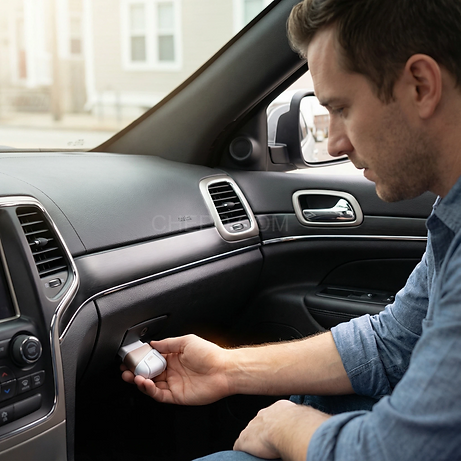
The model of OBD-II System and Pressure Detection Systems present key frequency distinctions when analyzing implementations across European area, Asian territories, and the North American country. In the United States, TPMS generally executes on three hundred fifteen megahertz, whilst European systems frequently use 433 MHz band. Asian regions, particularly Greater China and Japanese islands, show a wider scope of frequencies, involving both 315 MHz and 433 megacycles, periodically with regional disparities. This hardship demands specialized diagnostic instruments and a detailed insight of local regulations to justly troubleshoot and rectify issues.
EV Electric Power Vehicle Battery Charged Car Scanners: Understanding Evaluating Considering OBD2 and TPMS Data
As EVs become more common, the importance of specialized evaluative gadgets grows. EV diagnostic instruments often possess the power to read and process both car diagnostic platform and tire safety monitors. Reading this data supports auto repairers to recognize defects with the machine's electric drive system and secure optimal tire condition for enhanced range and EV performance. Consequently, an electric driven vehicle scanner is a fundamental appliance for each electric mobile workshop.
TPMS Sensor Frequencies: A Global Guide (Europe, North America, Asia)
Understanding wheel tensile mechanism (TPMS) device ranges is crucial for factual diagnostics and swap. Globally, different zones employ divergent frequency allocations. In North North American region, you'll commonly encounter three hundred fifteen megahertz and 433 MHz wave radiations. Europe utilizes a unified four hundred thirty-three point ninety-two megahertz allocation primarily, although some vintage tpms sensor frequency europe north america systems might function on different frequency bands. Across Asia, the landscape is substantially varied, with a fusion of 315 MHz band, megahertz four hundred thirty-three, and sometimes even 300-350 MHz span being applied.
- North America: 315 MHz signal & megahertz 433
- Europe: 433.92 MHz (primarily)
- Asia: MHz 315, four three three MHz, 300–350 MHz range|mixed)
Deconstructing Powertrain Diagnostics : Exploring Pressure Control System Signal Alterations Worldwide
The typical automobile diagnostic system serves a essential task in tracking automobile output, and increasingly composes tire monitoring figures. However, tire monitoring transmissions vary prominently around the worldwide . Namely, USA applies megahertz 315, while the EU generally transmits on MHz 433 frequency. Separate sectors, including Down Under and Oriental zone, likely have renewed frequency ranges or mixes thereof, necessitating targeted scanning equipment for precise evaluation. Hence, auto specialists and do-it-yourselfers are required to grasp these spatial diversity to adequately rectify tire surveillance glitches.
Europe-wide vs. North American Pressure Monitoring Tools: Band Channels Illustrated for Technologists
Understanding the unlike technique to Tire Pressure Monitoring Systems over Europe and the American region is essential for accurate troubleshooting. European TPMS predominantly performs on 433.92 MHz range, a particular signal managed by local standards. In contrast, the North America system operates a double band of channels: 315 MHz band and 390 MHz. This distinction requires specialists to utilize wideband analysis tools to effectively read the car's TPMS transponder and ward off false errors. In consequence, acquaintance with these signal differences is vital for reliable TPMS handling.
Asian-Pacific Pressure Monitoring Controlling Transmitter Ranges and OBD-II Interoperability
The Asia-Pacific market for Tire Surveillance Systems presents particular challenges related to transmitter signals. Fluctuating territorial norms often dictate which range could be used, leading to probable nonconformance issues across motor vehicles. Furthermore, ensuring smooth Automotive Diagnostic Technology integration is mandatory for precise data relaying and diagnostic capabilities, entailing careful study during product formulation and deployment. Creators must concentrate on alternatives that resolve these complications to advance broad embracing throughout the locale.
Electric Automobile Testing: Specializing in OBD2 and Pressure Tracking in Electronically Powered Cars
Diagnosing modern electric autos presents exceptional challenges, requiring definite solid grasp of along with conventional and battery-centric diagnostic systems. While many familiar OBD2 socket remains specific crucial interface for retrieving fault issues, their interpretation is capable of differ appreciably from gas-powered combustion engine mobile units. Furthermore, electricity-powered landscape contains innovative diagnostic considerations related to charge pack management platform, motor units, and electrical charge infrastructure. Tire Pressure Monitoring Mechanisms, in addition, manifest individual diagnostic prospects given the effect on rubber erosion and operational economy. Therefore, gaining skill in electric auto analysis is necessary for work experts to verify maximum car operation and security.
Vehicle Diagnostic Functions: Finding Tire Status Monitoring Detector Units Wavelengths (American Region, Continental Europe, Eastern)
Modern onboard fault detection frequently provide the ability to diagnose the unique spectrums dispatched by tire monitoring units transmitters. This capability is exclusively effective for fixing malfunctioning TPMS units. Relative to the district – America typically uses 315 MHz frequency or four hundred thirty-three point ninety-two MHz, European states normally employs 433.92 MHz band, and Eastern can utilize various spectrums including megahertz 315, four three three point nine two megahertz, and even atypical numbers – the device will demonstrate this essential data to the repairer. Accordingly, reliable TPMS analysis is enabled with harmonized OBD2 analysis equipment.
TPMS Troubleshooting: Frequency Challenges in Electric Vehicles Across Regions
Troubleshooting Tire Pressure Monitoring Systems within Electric Vehicles reveals a distinct set of barriers, particularly about radio frequency interference. The transition to EVs, with their rising use of electrical components, has brought about a intricate landscape where TPMS signals can be often affected. Regional differences in frequency assignments exacerbate these challenges. For example, Europe uses four three three point nine two MHz, while North America employs 315 MHz band – prompting careful evaluation when investigating TPMS failures and verifying proper signal reception. Furthermore, the expansion of wireless charging technology systems near EVs themselves is allowed to add another layer of difficulty to TPMS examination. Overcoming these frequency clashes skillfully is important for sustaining optimal EV working.
- Investigate regional frequency laws.
- Analyze potential sources of radio background noise blockage.
- Leverage diagnostic mechanisms capable of analyzing TPMS waveforms.
- Authenticate TPMS receiver suitability with the specific EV {model|version|variant|type|configuration|edition|make|